A sold record is evidence. A listing is only a wish.
The work is not finding the biggest number. It is finding the records that describe the same thing, in a condition close to yours, with an amount you can read correctly.
Inspect before you search
Turn it over. Read the back. Check the lining, hinge, edge, and paper. Photograph the mark and every flaw.
Name only what the object proves
Build a search from visible facts: maker or mark, form, material, pattern, size, and distinguishing text.
Compare completed sales
Separate marketplace records, auction lots, and specialist archives. Check dates, lot contents, condition, and what the displayed amount includes.
Keep the middle, not the marvel
Use several close matches, explain exclusions, and write a cautious range instead of repeating the single highest result.
The guide
The complete digital field guide
What It Actually Sold For
Digital PDF + EPUB - instant download, nothing is shipped
A whole-house method for finding completed sales, reading the records correctly, and keeping a list you can return to.
Nine complete chapters and two working appendices
Search builders, record checks, comparison sheets, and an inventory method
Category guidance for jewelry, silver, glass, china, textiles, bags, kitchen pieces, small furniture, paper, and more
Free method updates when major record sources change
$29
You are buying a digital PDF + EPUB. Nothing will be mailed.
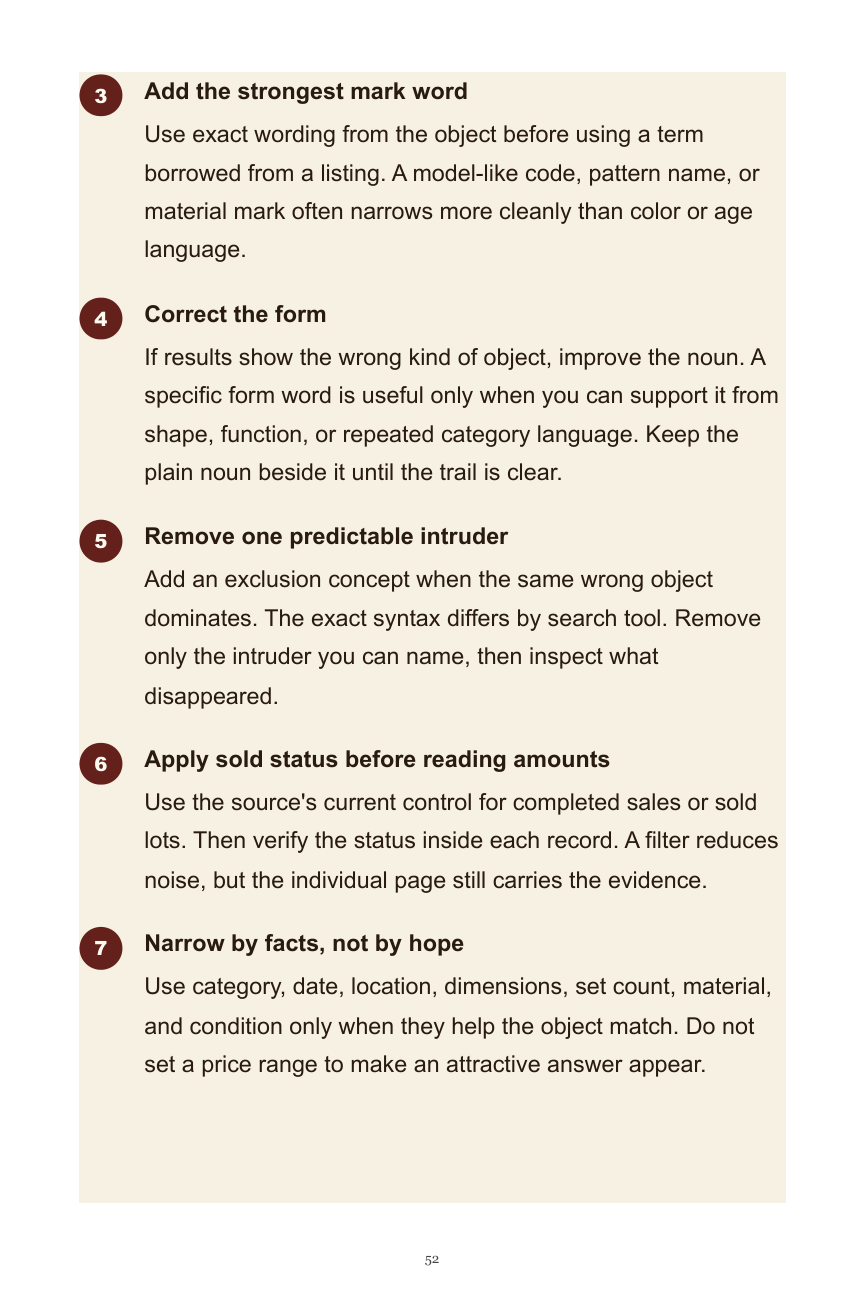
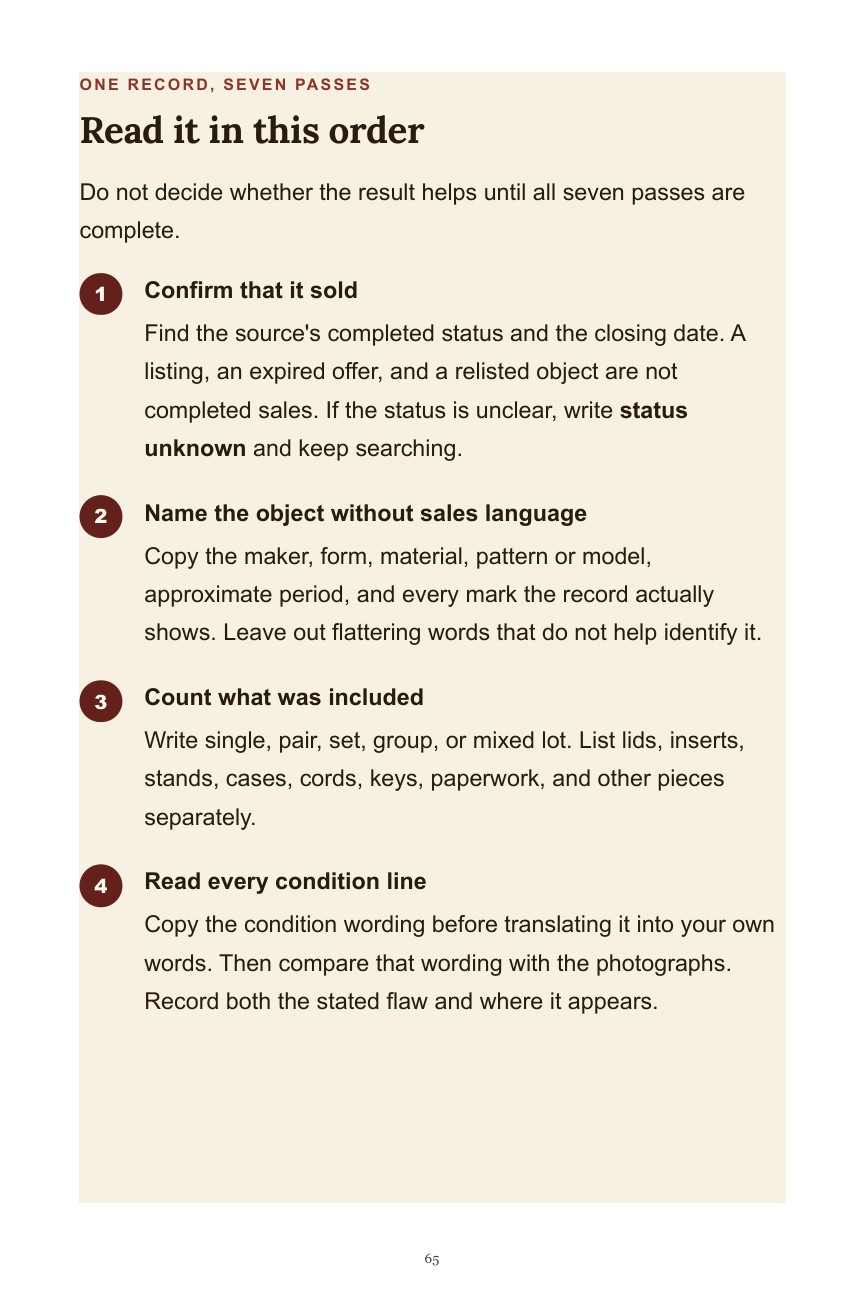
These are rendered pages from the book, not decorative mockups.
Build the search from what you can see and prove.Read the amount basis, condition, and lot contents before comparing.
InspectPhotograph the mark and every flaw.
CompareKeep several close completed sales.
RecordWrite the range you can explain.
A clearer record
The useful change is smaller than a windfall and better than a guess.
This guide does not promise a hidden treasure. It gives you a calmer next step.
Before
“It is old, so it must be worth something.”
After
“Here are the closest sold records, why they match, and what I still do not know.”
A field note from Nell
“Most mistakes happen before the search box. Someone decides what the object is too soon.”
I have spent decades turning things over, reading faint marks, comparing chipped rims, and watching good objects get dismissed because no one knew where to look.
Hidden Fortune is the method I wish every family had before the first donation run: slow down, photograph the evidence, find actual completed sales, and leave room for “I do not know yet.”
The guide is educational. It is not an appraisal, an authentication, or an individual valuation.
30
Thirty quiet days to decide.
Read it. Try the method on something in your house. If it is not useful, email within 30 days for a refund. You keep the files.
Questions
Know what this guide can and cannot do.
It is a research method for ordinary household objects. It does not turn uncertainty into certainty.
Will this tell me exactly what my object is worth?
No. It teaches you to find and compare real completed-sale records, then document a cautious range. It cannot inspect your object or promise what a future buyer will pay.
Is this an appraisal or authentication?
No. The guide is educational and does not provide an appraisal, authentication, tax advice, legal advice, or an individual valuation.
Is this for rare museum pieces?
It is built for the mixed contents of a real house: jewelry, plate, glass, china, seasonal objects, textiles, bags, kitchen pieces, small furniture, and paper. Truly unusual objects may not have enough public records for a useful comparison.
What if the records disagree?
That is normal. The method shows you how to check identity, condition, lot contents, region, date, and amount basis, then use the middle of several close records instead of choosing the largest number.
Do I receive a printed book?
No. This purchase is a digital PDF + EPUB delivered after checkout. Nothing is printed or shipped.
What is the refund policy?
Email within 30 days of purchase if the guide is not useful. You will receive a refund, and you keep the files.
Start with the object in your hand
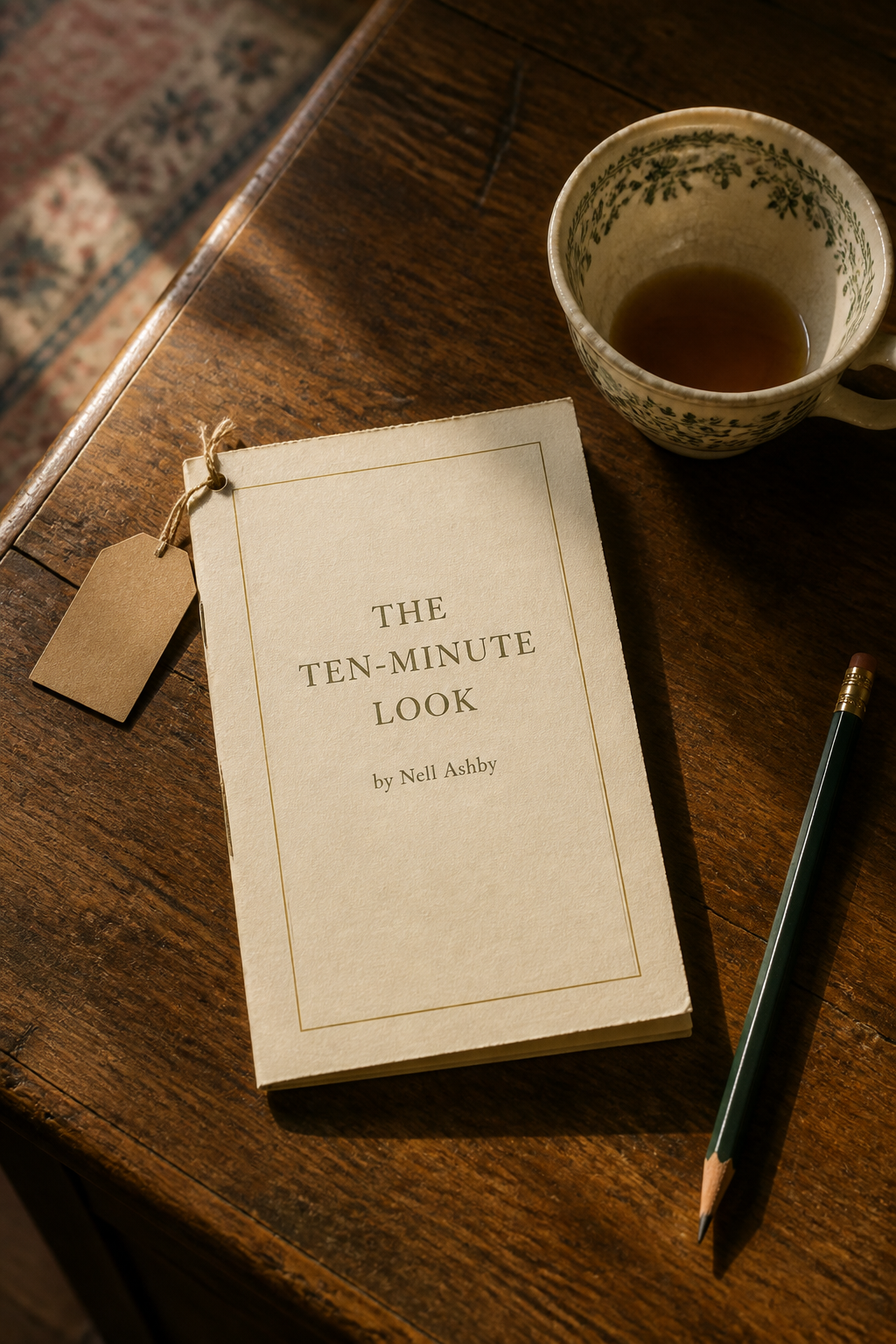
The Ten-Minute Look
Seven places to check, six photographs to take, and four details to write down before you decide something is worthless.